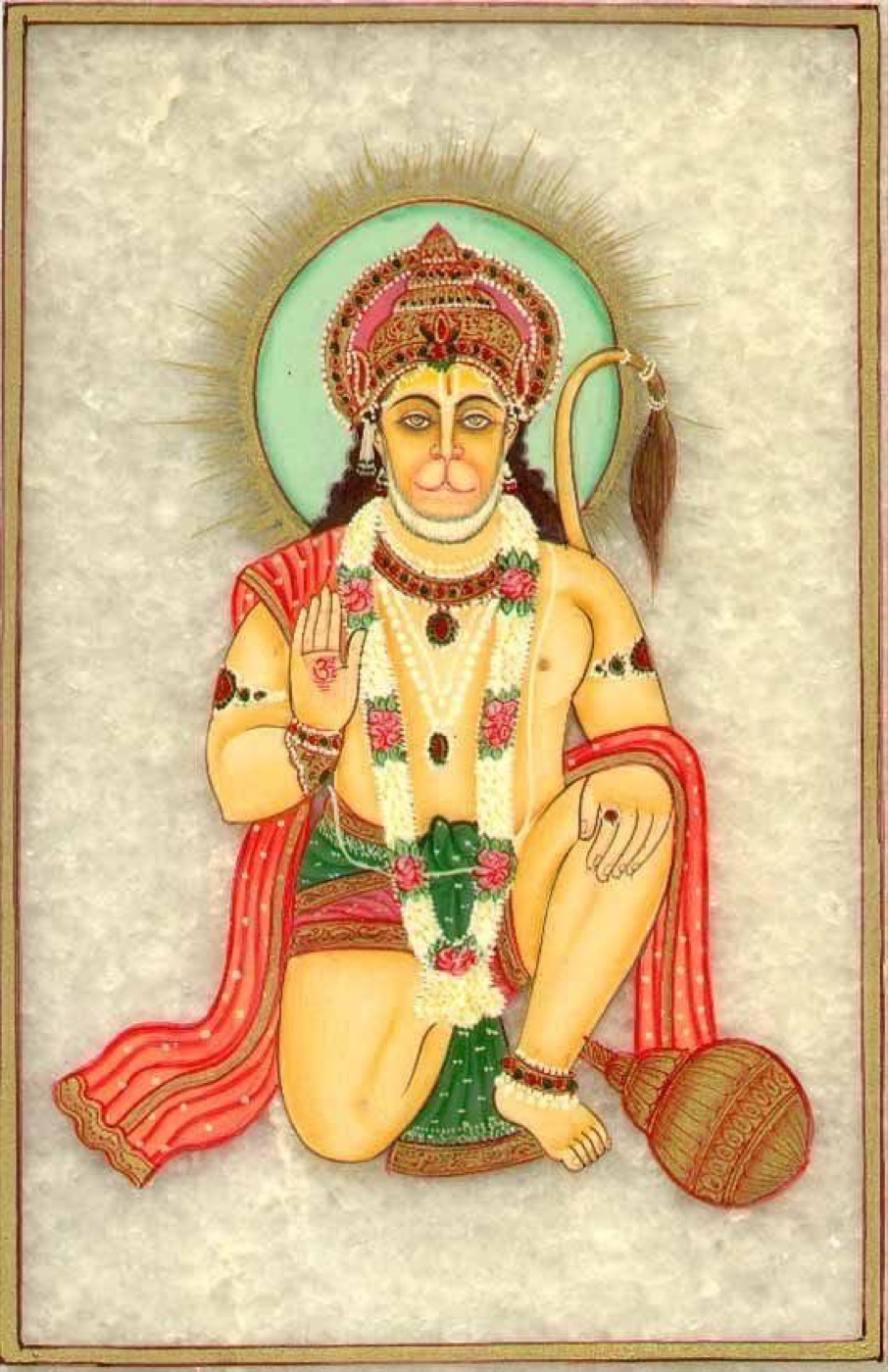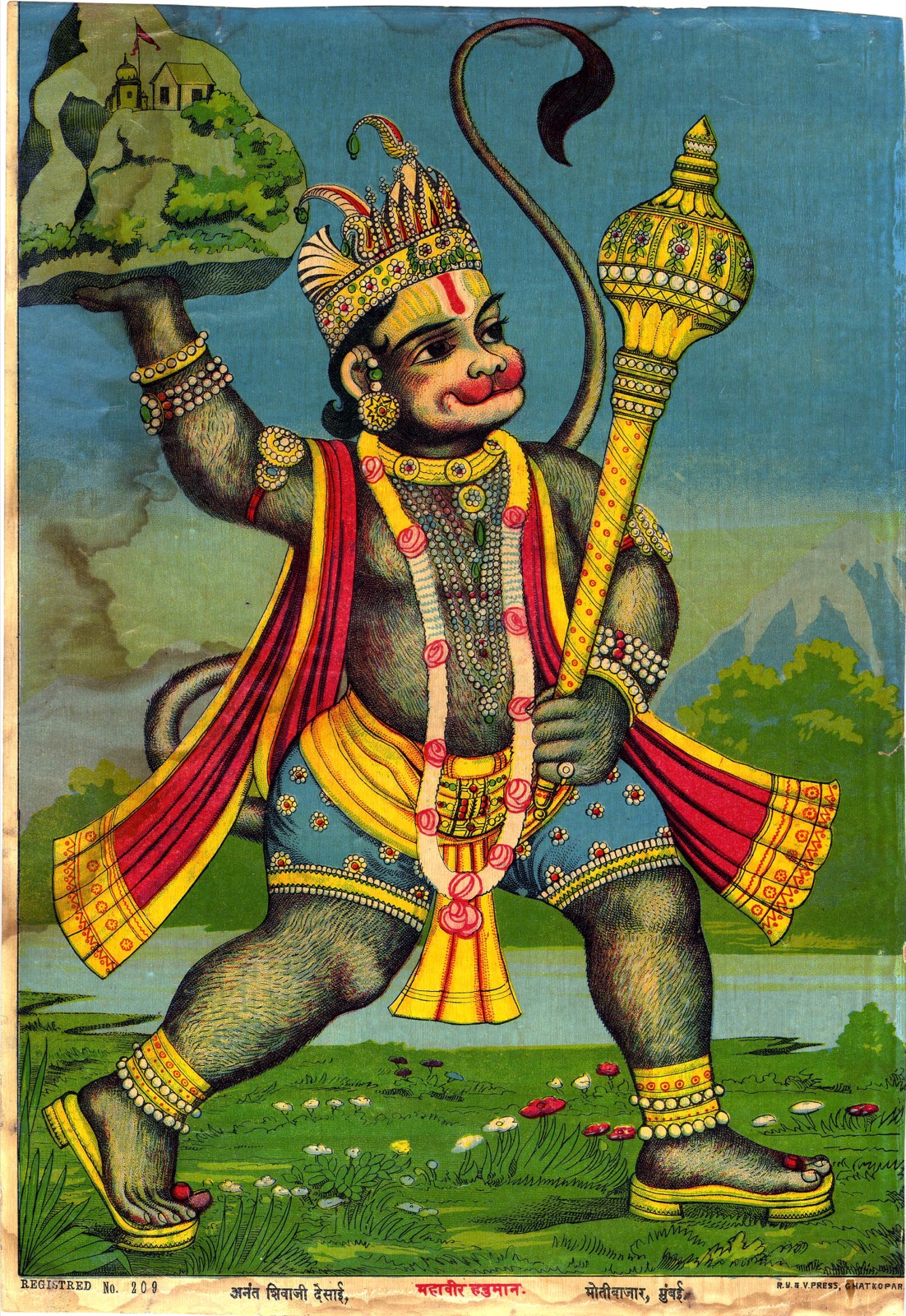
श्री हनुमान

The perfect devotee

Hanuman-ji

Maharaj-ji's whole life flowed from his love of Hanuman — strong and humble, the one whose only wish is to serve Ram. To draw near Maharaj-ji is to be turned toward Hanuman.

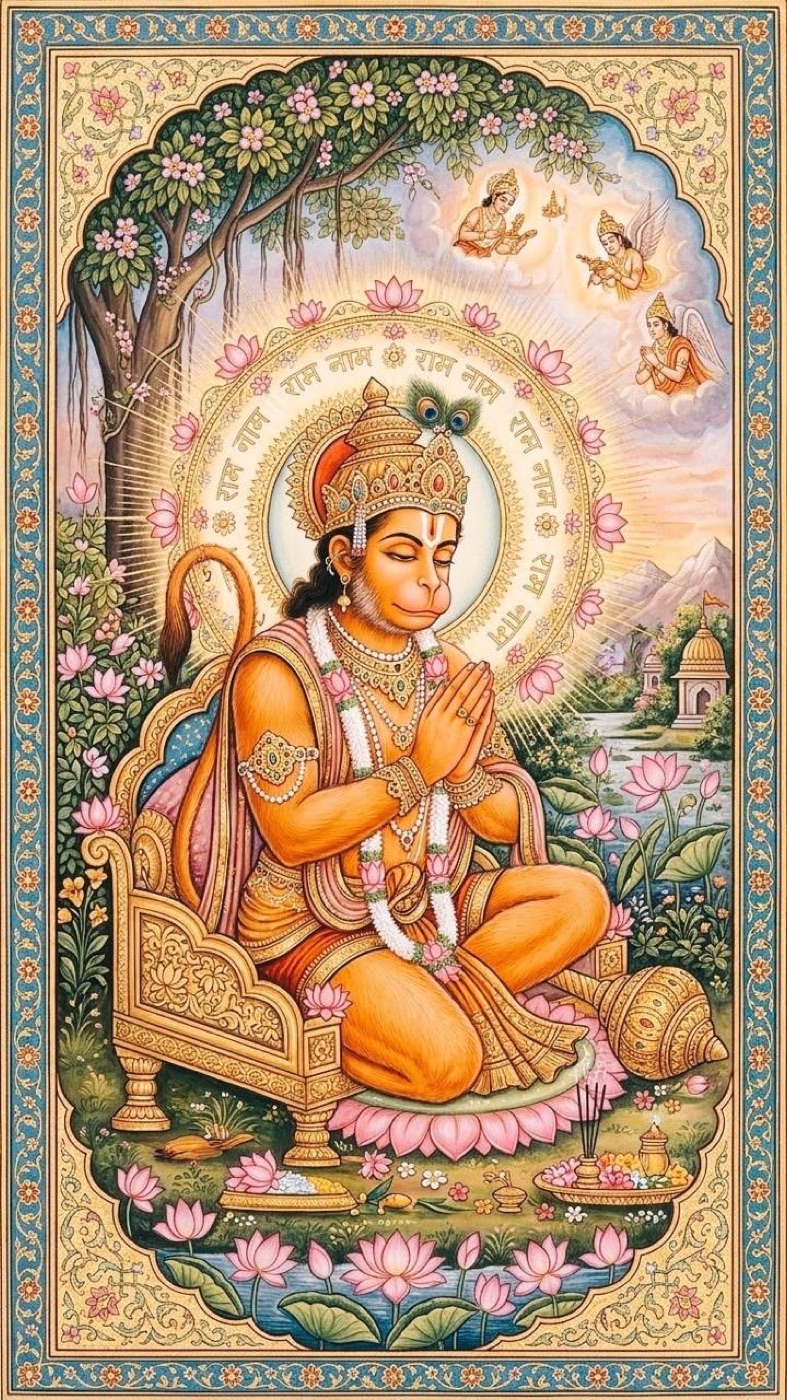
Hanuman seated in devotion, hands folded, haloed by the written name of Ram
Hanuman in prayer, haloed by the very name of Ram — राम नाम.
Devotional painting · shared in seva

Hanuman is the great devotee — son of Vayu, the wind, and an emanation of Shiva himself. In him, every quality a seeker hopes to grow is already perfected: boundless strength laid humbly at the feet of God, and a love so single-pointed that it becomes its own kind of power.

In the Ramayana

When Sita was carried away to Lanka, it was Hanuman who leapt across the ocean to find her, who carried Ram’s ring as a token of hope, and who later bore the whole mountain of healing herbs when he could not tell which single plant was needed. Again and again he does the impossible — not for himself, but because his Lord has need of it. This is why devotees turn to him: “Grant me strength, intelligence and wisdom, and remove my sorrows and shortcomings.”
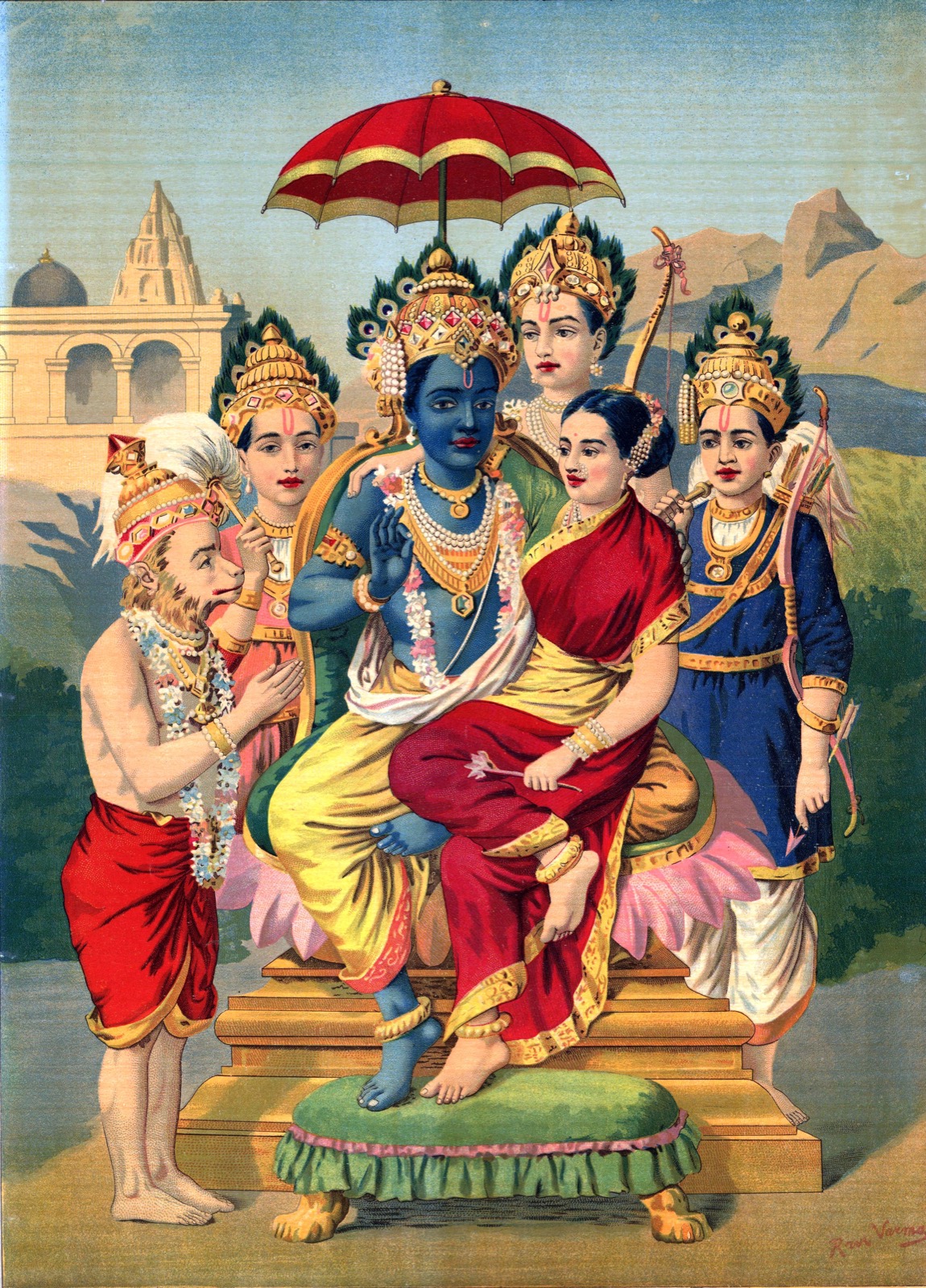
The Ram Darbar — Rama, Sita, Lakshmana and brothers, with Hanuman kneeling in devotion
The Ram Darbar — and there, kneeling at their feet, Hanuman. Raja Ravi Varma · public domain

Why Maharaj-ji pointed to Hanuman

Neem Karoli Baba built Hanuman temples across India and would not allow devotees to touch his own feet — touch Hanuman’s feet instead, he would say. He did not want to be the destination; he wanted to be a finger pointing at the moon. Wherever his dhams stand, from Kainchi to Taos, a murti of Hanuman stands at their heart. To love Hanuman, Maharaj-ji taught, is to learn the only thing worth learning: how to love and serve completely.

Sankat Mochan — remover of troubles

Across India, Hanuman is beloved as Sankat Mochan — the one who lifts away difficulty and fear. Tuesday and Saturday are his days; on them, in homes and temples everywhere, devotees light a lamp and sing his praises, and feel their worries grow a little smaller. It is said that wherever his name is sung with love, Hanuman himself is quietly present, listening.

Why we sing the Chalisa

The forty verses of the Hanuman Chalisa, composed by the poet-saint Tulsidas, are the heartbeat of our Tuesday gathering. You need not follow every word — the names do their own work. To sing them together is to borrow a little of Hanuman's courage, and a little of his devotion. You can join us on a Tuesday, or take the Chalisa home from the card below.
What he embodies
भक्ति

Devotion

His heart holds only one name. Hanuman is the very picture of bhakti — love so complete it forgets itself.

बल

Strength

He lifted a mountain and leapt across the ocean. Yet his strength bows always in service, never in pride.

सेवा

Service

He asks for no reward but the chance to serve Ram. To work for others is, for him, the highest joy.

विनम्रता

Humility

The mightiest of beings makes himself the smallest. In humility he finds his greatest power.

Many forms, one love

The forms of Hanuman

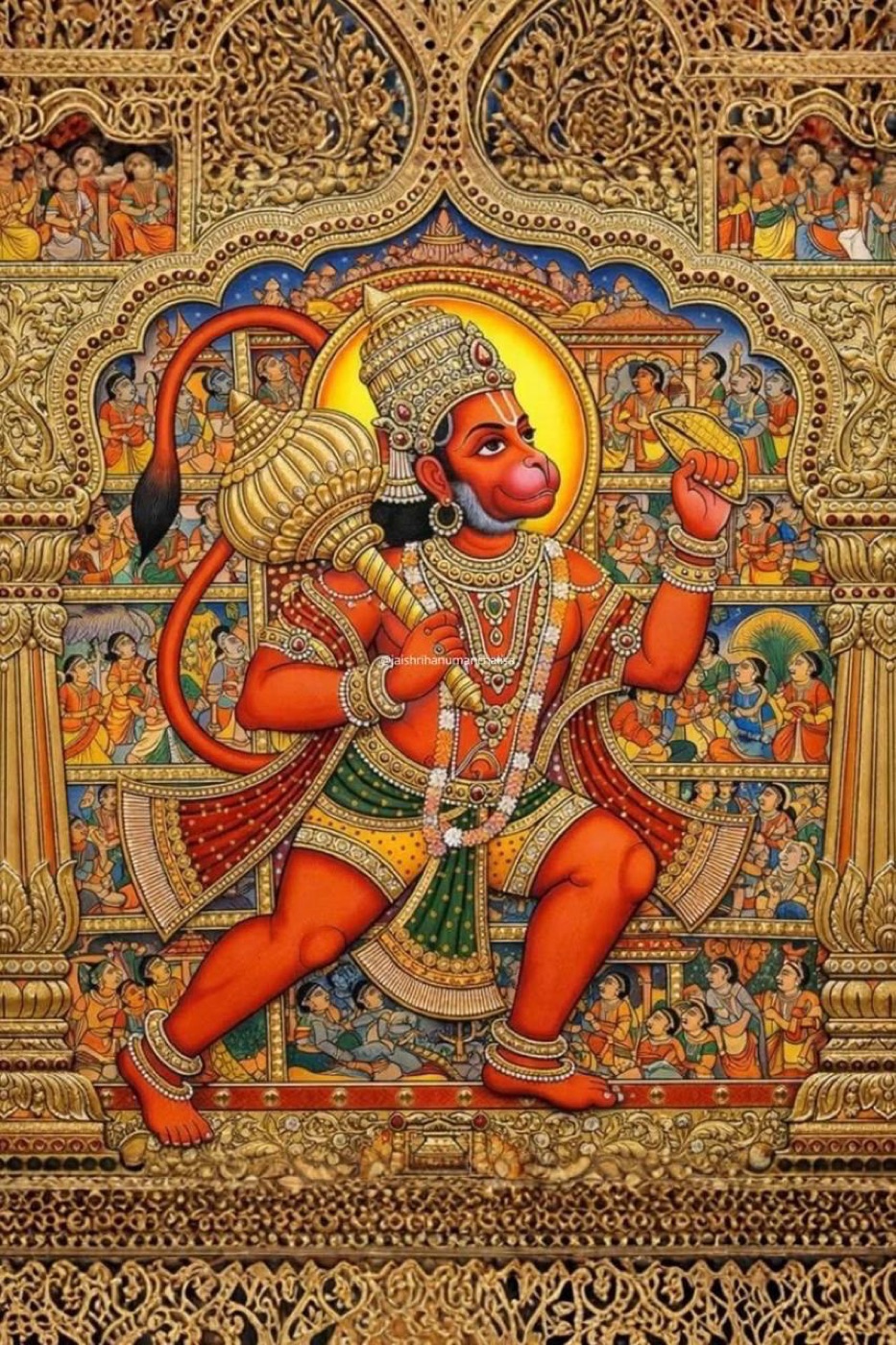
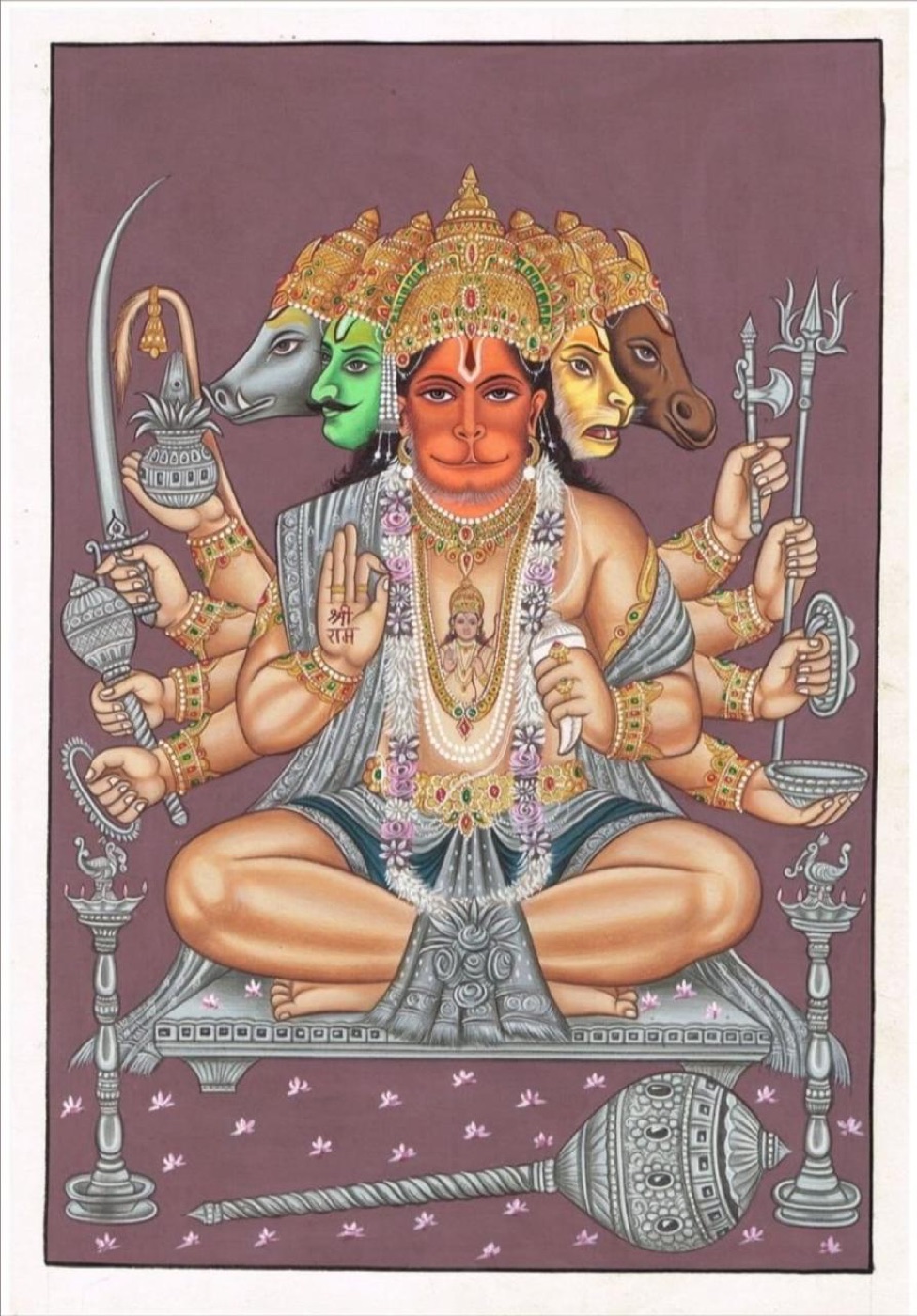
Across India he is painted a thousand ways — dancing, fierce, five-faced, or simply lost in prayer. Each form is a window onto the same boundless devotion.

Golden Tanjore-style painting of Hanuman dancing
Panchamukhi Hanuman, the five-faced form
Hanuman kneeling with folded hands and mace
Pattachitra painting of the fierce protector Hanuman
Hanuman revealing Ram and Sita within his heart
Hanuman carrying the mountain of healing herbs

Devotional paintings shared in seva & public-domain works — see credits →

Hanuman near Nashik

His birthplace, on our doorstep

We are blessed — the very hill where Hanuman was born rises just outside Nashik. A handful of beloved Hanuman temples sit close at hand, too. Here is where to find them, and how to reach.

Hanuman’s birthplace

Anjaneri अंजनेरी

The hill where Anjani gave birth to Hanuman rises just outside Nashik, on the road to Trimbakeshwar. Near the summit stand a temple to Anjani Mata — said to be the only one of its kind — and a Hanuman temple, reached by a beautiful trek past ancient caves and Sita’s cave.

Open in Maps →
Where
Anjaneri, Nashik–Trimbakeshwar Rd, Maharashtra 422213
How to reach
About 20 km from Nashik. Drive, or take a Trimbak-bound bus to Anjaneri Phata; Anjaneri village is a ~15-min walk, then it’s a ~1½-hour trek to the temples. Loveliest just after the monsoon.

Hanuman temples in the city

Takli Gomaya Maruti Mandir

Takli, Nashik

Established by Sant Samarth Ramdas in 1633; the Hanuman murti here is shaped from gomaya (cow dung).

Open in Maps →

Dutondya Maruti Mandir

Panchavati, on the Godavari

A single stone with Hanuman carved on both faces — do-tondya, “two-faced” — beside the holy river.

Open in Maps →

Dakshinmukhi Hanuman Mandir

Nr Mico Circle, Untwadi Road, Nashik 422002

A south-facing (dakshinmukhi) Hanuman, dear to devotees in the city.

Open in Maps →

Temple timings and trek conditions change with the season — please check locally before you set out, especially during the monsoon. Details gathered from public travel and temple sources; see credits →

Sing along

श्री हनुमान चालीसा

The Hanuman Chalisa — forty verses of praise composed by Tulsidas — is the heartbeat of our Tuesday satsang. Whether you know it by heart or are reading along for the first time, you are welcome to sing.

जय हनुमान ज्ञान गुण सागर